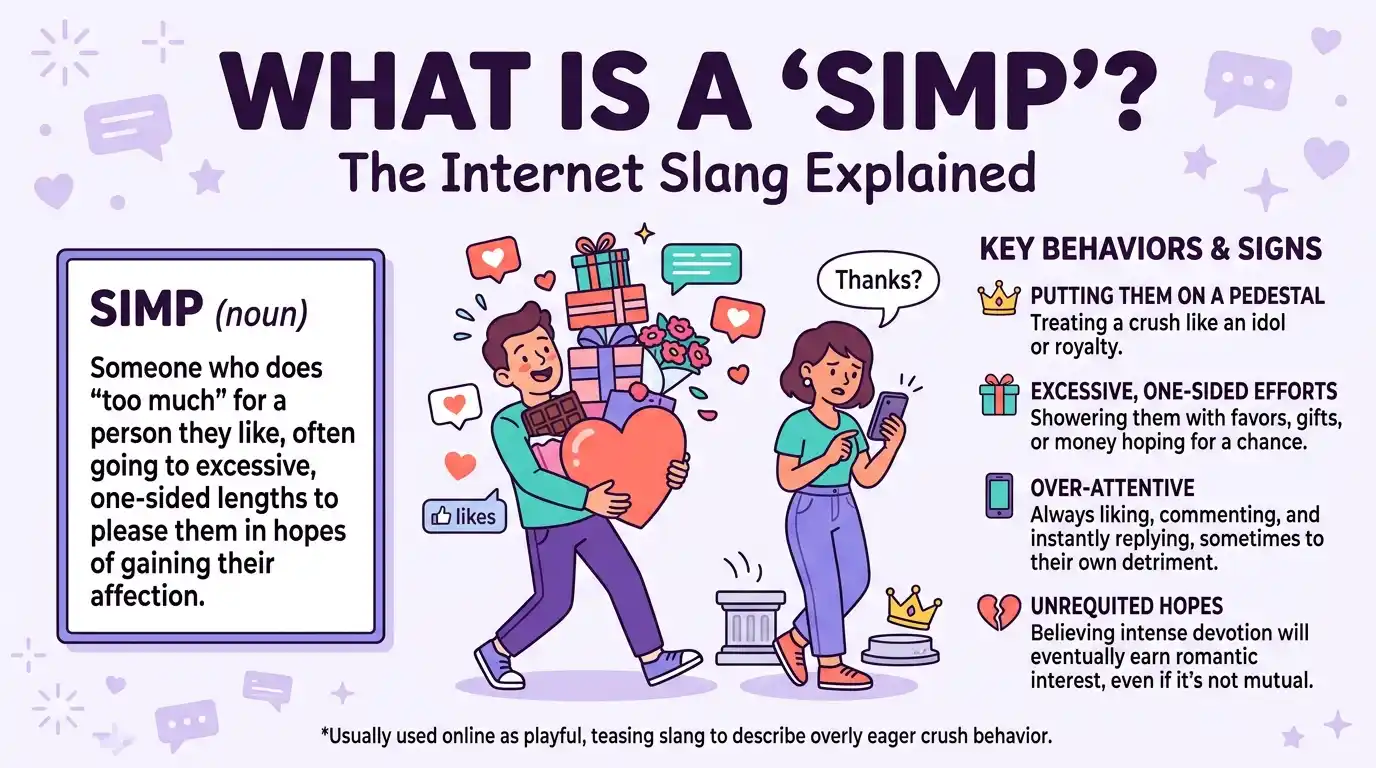
If you have seen the word “simp” in a comment section, a TikTok caption, or a group chat, you are not alone in wondering what it means.
In simple terms, a simp is someone who gives too much attention, kindness, or gifts to a person they like, often without getting anything back in return.
It is a slang word that blew up on the internet and is now used every single day by millions of people, especially online.
In this article, you will learn exactly what “simp” means, where it came from, how people use it correctly, and how it is different from just being a nice or caring person. By the end, you will fully understand this popular slang word and how to use it the right way.
Quick Answer
A simp is a slang term for someone, usually a man, who does too much for a person they are attracted to, hoping to win their love or attention.
This can mean showering someone with compliments, spending money on them, or always being available for them, even when that person does not treat them the same way back.
The word is mostly used online, and it can be said as a joke between friends or as a real criticism, depending on how it is used.
Meaning or Definition
The simplest way to explain “simp” is this: it describes someone who tries too hard to impress a person they like romantically. This usually happens when the effort is one-sided. The simp gives a lot of time, money, attention, or emotional support, but the other person does not give the same back.
Being a simple is not just about liking someone. Everyone likes people and wants to make a good impression. The difference is that a simp goes overboard. They might ignore their own needs, spend money they do not have, or put the other person on a pedestal, treating them as more important than they really are in the relationship.
Here are some common signs people point to when calling someone a “simp”:
| Behavior | Why People Call It “Simping” |
| Buying expensive gifts for someone who barely talks to them | Spending resources without getting real attention back |
| Always agreeing with everything the person says | Losing their own opinion to please someone |
| Dropping plans with friends whenever the crush calls | Putting one person above everyone else, even when unhealthy |
| Defending someone online who treats them badly | Protecting a person who does not respect them |
| Giving constant compliments with no response | One-sided emotional effort |
It is worth saying clearly: the word is slang, and it is often used loosely or as a joke. Not everyone who is called a simp actually fits every point above. Friends often use the word in a light, teasing way, similar to calling someone “whipped.”
Origin or History
The word “simp” is not brand new. It actually comes from the word “simpleton,” an old English word for someone seen as foolish or easily fooled. Language experts have traced early slang use of “simp” as a shortened insult back many decades, long before the internet made it popular again.
The modern version of “simp,” the one people use today about crushes and dating, grew mostly out of hip-hop culture in the 1980s and 1990s. Some rap songs used the word to describe men who were seen as too soft or too eager to please women.
The huge jump in popularity happened much later, around 2019 and 2020, on platforms like TikTok, Twitter, and Reddit. Meme pages and online communities started using “simp” constantly, often as a joke about celebrities, streamers, or even fictional characters. The word spread so fast that dictionaries like Dictionary.com and Merriam-Webster began tracking it as slang worth watching, since so many young people were searching for what it meant.
Since then, the word has become a normal part of internet language. It shows up in comments, memes, video titles, and everyday conversations among teens and young adults.
Grammar or Correct Usage
“Simp” can be used in a few different ways in a sentence, and knowing the grammar helps you use it correctly.
As a noun, it describes a person: “He is such a simp for spending all his money on her.”
As a verb, especially in its “-ing” form, it describes the action: “Stop simping over someone who does not even text you back.”
People also use it as an adjective in casual speech, though this is less common: “That was a simp move, buying her flowers after she blocked you.”
The word is informal, so it fits best in casual writing, social media posts, texting, or spoken conversation. It is not the kind of word you would use in a school essay, a job interview, or a business email, since it is slang and can sound rude or dismissive if used in the wrong setting.
One more grammar tip: while “simp” was first used mostly to describe men, it is now used for anyone, of any gender, who acts this way toward someone they like.
Common Mistakes
Many people misuse “simp” without realizing it, so here are a few common mix-ups.
The first mistake is confusing kindness with simping. Being generous, thoughtful, or supportive toward a partner is not the same as simping. Simping specifically means the effort is one-sided or excessive, often ignoring the other person’s lack of interest or respect.
The second mistake is using “simp” to describe someone in a healthy, mutual relationship. If two people care for each other equally, that is just a good relationship, not simping.
The third mistake is thinking the word only applies to romantic situations. While dating and crushes are the most common use, people also use “simp” jokingly to describe extreme fans of celebrities, athletes, or online streamers, even without any real romantic connection.
The table below shows the difference clearly.
| Situation | Is It Simping? | Why |
| Buying your partner a birthday gift they wanted | No | This is a normal, caring relationship action |
| Spending your rent money on gifts for someone who ignores you | Yes | One-sided effort with no real connection back |
| Complimenting a friend you are not interested in | No | This is friendly, not romantic pursuit |
| Defending a stranger online you have a crush on, even when they are wrong | Yes | Prioritizing a crush’s approval over your own judgment |
| Supporting your spouse during a hard week | No | This is healthy partnership, not simping |
Understanding this difference matters because the word can be hurtful if used carelessly. Calling every act of kindness “simping” can discourage people from being caring partners, which is not the point of the word at all.
Real-Life Examples
Seeing the word used in real situations makes the meaning much clearer.
Example one: A man spends hundreds of dollars on gifts for an online streamer he has never met in person, hoping she will notice him during her live videos. Friends might say he is “simping” for the streamer.
Example two: A teenager constantly texts a classmate good morning and good night every single day, even though the classmate rarely replies. Classmates might tease him for simping.
Example three, used humorously: A fan defends their favorite celebrity no matter what mistakes that celebrity makes, refusing to hear any criticism. Online, people often joke that this fan is “simping” for the celebrity, even without any romantic feelings involved, just extreme loyalty.
Example four, showing the difference: A husband cooks dinner for his wife because she had a long day at work, and she does the same for him the next week. This is not simping. This is a normal, balanced relationship where both people care for each other.
These examples show that context is everything. The same action, like buying a gift, can be simping or simply kindness, depending on whether the effort is returned.
Current Usage or Trends
Today, “simp” remains a common word across social media, especially among younger generations. It shows up constantly in TikTok comments, YouTube videos, gaming communities, and Twitter or X posts. Streaming platforms like Twitch also use the word often, since some viewers spend large amounts of money on gifts, called donations, for streamers they admire.
The word has slightly softened over time. When it first became popular, it was often used as a strong insult. Now, many people use it in a lighter, joking way among friends, similar to saying someone has a big crush. Still, in more serious conversations, it can carry criticism about self-respect and unhealthy relationship patterns.
Some online communities have also started using related terms alongside “simp,” such as “simp nation” or “certified simp,” usually as internet humor rather than serious insults.
Tips or Best Practices
If you want to use the word “simp” correctly and respectfully, here are some helpful tips.
Use it casually with friends, but be careful using it toward strangers online, since it can come across as mean or bullying. Remember that being kind, generous, or caring toward someone you like is not automatically simping, so do not let the word discourage healthy affection. Save the word for situations where the effort is truly one-sided or where someone is ignoring their own well-being to please another person. Avoid using the term in formal writing, school papers, or professional settings, since it is slang and may seem unprofessional. Finally, if you hear the word used against you, remember it is usually said in a joking way among friends, but if it feels hurtful, it is okay to say so.
FAQs
What does it mean when someone calls you a simp?
It usually means they think you are giving too much attention, money, or effort to someone you like, without getting the same effort back. It can be a joke among friends or a real criticism, depending on the tone.
Is “simp” a bad word?
It is slang, not a curse word, but it can still feel insulting if used harshly. Among friends, it is often lighthearted teasing rather than a serious insult.
Can girls be called simps too?
Yes. While the word was first used mostly for men, today it applies to anyone, of any gender, who acts overly eager or one-sided toward someone they like.
What is the opposite of a simp?
There is no single official opposite word, but people sometimes use terms like “player” or describe someone as emotionally distant or hard to impress, since that is the opposite behavior of giving too much too easily.
Where did the word simp come from?
It comes from the old word “simpleton,” and its modern dating-related meaning grew from hip-hop slang in the late 1900s before becoming extremely popular on social media around 2019 and 2020.
Is being generous to your partner the same as simping?
No. Simping specifically means one-sided effort where the other person does not care back. Mutual kindness in a healthy relationship is not simping at all.
Conclusion
In short, the simp meaning describes someone who puts in too much effort, money, or attention toward a person they like, often without getting anything back in return.
The word started as old slang for a foolish person, grew through hip-hop culture, and later exploded across the internet through memes and social media. It is important to remember that being kind or caring toward a partner is completely normal and healthy, and it only becomes “simping” when the effort is one-sided or when someone loses their own self-respect trying to please another person.
Use the word casually and kindly, and always remember that real, balanced relationships are built on effort from both sides, not just one.

Hi, I’m Benjamin Dreyer. I enjoy exploring words, phrases, slang, abbreviations, acronyms, and digital communication. At Linkquorax.com, I share simple and accurate explanations to help readers understand unfamiliar terms and popular internet expressions. My goal is to make every meaning clear, useful, and easy to understand. Whether you are curious about a new word or an online phrase, Linkquorax.com provides straightforward information to help you learn quickly and communicate with confidence in everyday conversations.