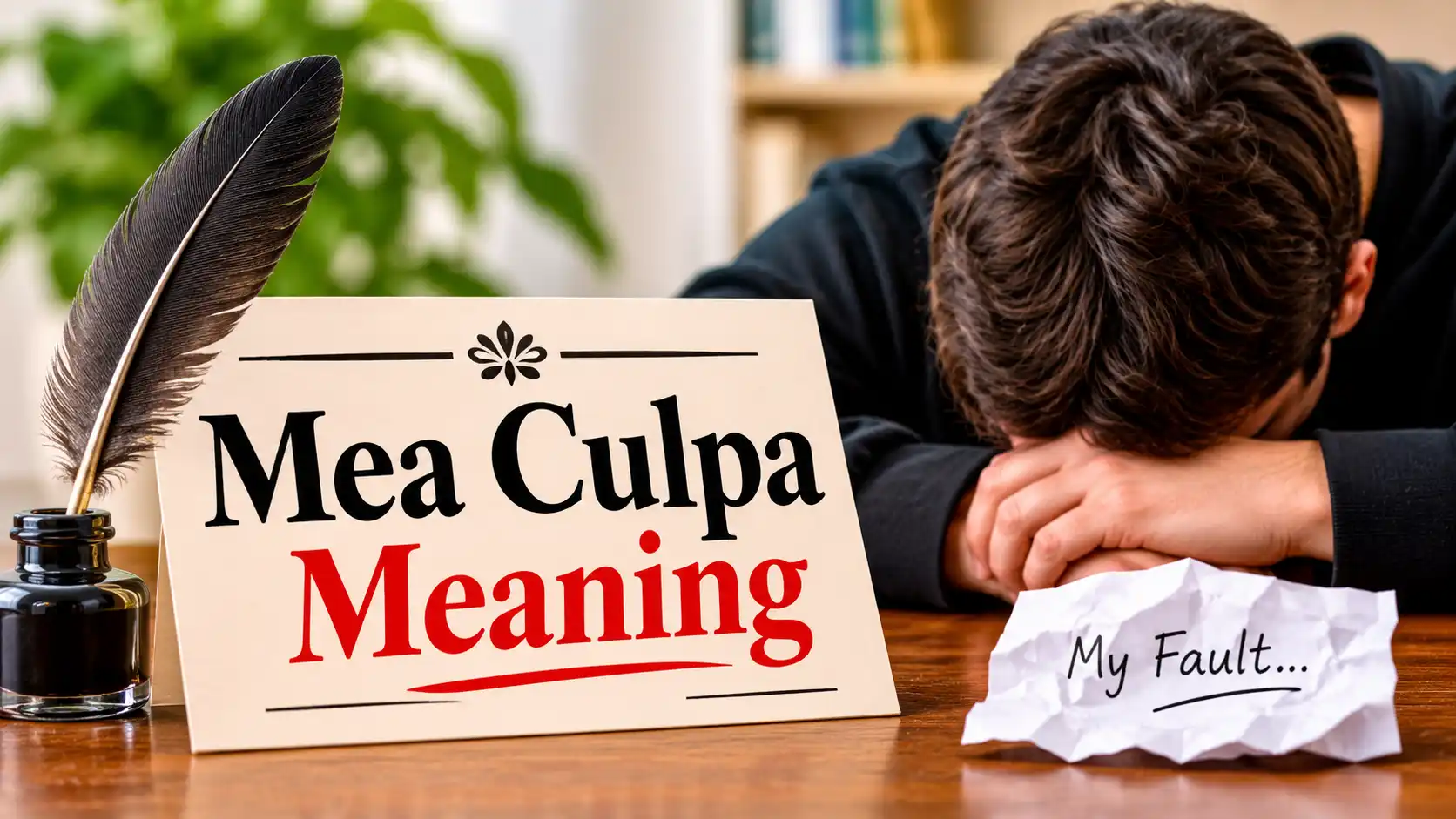
We all make mistakes. It is part of being human. Sometimes we forget an important date. Sometimes we break something valuable. Other times we say the wrong thing at the wrong time. When this happens, we need a way to admit we were wrong. The fancy Latin phrase for this is “mea culpa” .
But what does mea culpa mean in simple English? It means “my fault” or “I did it” . This article will explain everything you need to know. You will learn the mea culpa meaning, how to use it, and why it matters.
You will also see real-life examples. By the end, you will feel confident using this phrase. You might even impress your friends with your fancy vocabulary.
Let us dive in and explore this useful expression together.
Quick Answer
The mea culpa meaning is simple. It is a Latin phrase that means “through my fault” . People use it to admit they made a mistake. It is like saying “my bad” or “I am sorry” . You can use it in two ways. First, you can say it as a quick apology. Second, you can use it as a noun to describe a formal apology.
For example, a politician might issue a public mea culpa after a scandal . The phrase comes from the Catholic Church. It is part of a prayer called the Confiteor . Today, people use it in everyday life. It is a useful way to take responsibility for your actions.
Definition and Core Meaning
So, what exactly is the mea culpa meaning? The dictionary definition is clear. Mea culpa is an acknowledgment of personal error or fault .
It is a statement where you say something is your fault . The Latin translation is “through my fault” . This is the core mea culpa definition you need to remember.
Here is a helpful breakdown:
| Part of Speech | Meaning | Example |
| Interjection | A quick way to say “my fault” or “I apologize” | “I forgot to bring the cake. Mea culpa!” |
| Noun | A formal acknowledgment of guilt or error | “The company issued a mea culpa for the mistake.” |
When you make a mea culpa, you are admitting “I did it. I am guilty!” . It is a powerful way to own your mistakes. It shows honesty and maturity. People respect those who can admit when they are wrong. It is much better than making excuses or blaming others. A genuine mea culpa can repair relationships. It can also restore trust . In today’s world, many people avoid responsibility. That is why a sincere mea culpa stands out .
How to Use Mea Culpa in a Sentence
The mea culpa meaning is straightforward. But how do you use it correctly? You can use it in two main ways. First, you can use it as a standalone exclamation. This is the most common way. You use it like you would say “my bad.” For example, imagine you step on someone’s foot. You can say, “Mea culpa!” .
It is a quick and easy apology. Second, you can use it as a noun. You can talk about “issuing a mea culpa.” This refers to a formal apology or statement. For example, a newspaper might issue a mea culpa for printing a false story . A politician might offer a mea culpa for a broken promise .
Here are some examples to help you understand:
Example 1:
“Who ate the last cookie?”
“Mea culpa! I could not resist.”
Top Example 2:
The mayor’s public mea culpa did not satisfy his critics.”
Example 3:
After the company made a huge error, the CEO gave a mea culpa at the press conference.”
Example 4:
Okay, so maybe I misjudged you. Mea culpa!”
As you can see, the phrase is quite flexible. You can use it in serious situations. You can also use it in humorous or lighthearted ones . The key is that you are admitting fault.
The Origin of Mea Culpa
The mea culpa meaning has deep roots. It comes from Latin . But its story goes even further. The phrase has a long history in the Catholic Church . It comes from a prayer called the Confiteor. This prayer is part of the Mass. It is a prayer of confession. In this prayer, people admit their sins.
They say “mea culpa, mea culpa, mea maxima culpa.” This means “through my fault, through my fault, through my most grievous fault” . They also gently strike their chest. This gesture shows they are truly sorry . This tradition goes back many centuries.
Interestingly, the phrase has been used in English for a long time. The famous writer Geoffrey Chaucer used it in the 1300s . So, the phrase is not new. It has been around for hundreds of years. It moved from a religious setting to everyday language. Today, it is a common English phrase.
It is a classic example of how languages borrow words from each other. Understanding the origin of mea culpa helps you appreciate its meaning. It is a serious, weighty phrase. That is why it sounds so formal and official .
Mea Culpa vs. My Bad
Many people compare mea culpa to “my bad.” They are similar. Both phrases admit a mistake. However, there are some key differences. “My bad” is very informal . It is slang. You use it with friends and family. It is casual. Mea culpa, on the other hand, can be formal . You might use it in a serious situation. But you can also use it in a funny, exaggerated way. The table below shows the differences:
| Feature | Mea Culpa | My Bad |
| Formality | Can be formal or playful | Very informal |
| Origin | Latin, old, religious roots | American slang, modern |
| Tone | Sounds serious, official, or dramatic | Casual, laid-back |
| Best Used | In writing, public apologies, or for emphasis | With friends, in casual conversation |
| Example | “The senator offered a mea culpa.” | “I forgot to call you. My bad.” |
So, which one should you use? It depends on the situation. If you are at work, a mea culpa might be better. It sounds more professional. If you are with friends, “my bad” is perfect. You can also choose based on the severity of the mistake. For a small error, “my bad” is fine. For a bigger mistake, a mea culpa shows you are taking it seriously .
Mea Culpa in Real Life
The mea culpa meaning is not just a dictionary definition. It plays a significant role in real life. What see it in the news. You hear it in politics. You also see it in business. In fact, it is often used when public figures make mistakes.
Politicians and Public Figures
Politicians often need to apologize. When they make a mistake, they often issue a mea culpa. This is a formal apology to the public . For example, a mayor might issue a mea culpa after a scandal . It is a way to show they are taking responsibility. It can also be an attempt to win back public trust. However, it does not always work. Sometimes the damage is already done .
Companies and Businesses
Companies also use mea culpa. When a product is faulty, they might issue a formal statement. This is their way of saying, “We made a mistake.” For example, a car company might admit they made a faulty car part. This public apology can help them save their reputation . It shows they are honest. It shows they care about their customers. A good example is Grammarly’s CEO, who issued a mea culpa on LinkedIn .
In the Entertainment World
Even celebrities use the phrase. Singers and actors sometimes make mistakes. They might issue a mea culpa to their fans. For instance, Madonna once included “mea culpa” in a song. The was a way to admit she caused pain . It shows that even famous people make mistakes. It also shows the phrase is useful in many contexts.
In Everyday Life
You do not need to be a politician to use it. You can use it in your daily life. What might use it at work. You could also use it at home. For example, imagine you forgot to do a chore. You can tell your spouse, “Mea culpa, I will do it right now.” It adds a touch of humor and sophistication to your apology. It is a great way to admit a mistake without being too heavy.
Other Words Related to Mea Culpa
The mea culpa meaning comes from the Latin word “culpa” . This word means guilt or fault . There are many English words that come from the same root. Learning these can expand your vocabulary. It also helps you understand the mea culpa meaning better. Here are a few related words:
- Culpable: This means deserving blame. If someone is culpable, they are responsible for wrongdoing. For example, “The driver was culpable for the accident.”
- Culprit: This means a person who is guilty of a crime or fault. The police often look for the culprit. For example, “The police caught the culprit.”
- Exculpate: This means to clear someone from blame. It means to prove they are innocent. For example, “The new evidence helped to exculpate the suspect.”
These words are all connected to the idea of guilt and fault. When you understand mea culpa, you are also learning a small piece of the English language. It shows how Latin has influenced modern English.
Common Mistakes and Misunderstandings
Even though the mea culpa meaning is simple, people still make mistakes. Here are some common errors to avoid.
Using It for Minor Inconveniences
One mistake is using it for small, daily problems. If you bump into a door, you don’t need to say mea culpa. It is a bit too dramatic for that. In those cases, “excuse me” or “sorry” is better. Save mea culpa for a real mistake you have made .
Confusing It with Other Latin Phrases
Some people confuse it with other Latin terms. For example, “quid pro quo” means something for something. That is not the same. Make sure you know the difference. Mea culpa is only about admitting guilt. Other Latin phrases have different meanings.
Overusing the Phrase
Another mistake is overusing it. If you say it all the time, it loses its meaning. It becomes a joke. It should be used for significant errors. A sincere mea culpa is rare. That is what makes it powerful. Save it for when you really mean it.
Not Using It When You Should
Many people are afraid to admit they are wrong. They make excuses instead. They try to blame others. This is a big mistake. A sincere mea culpa can actually help you. It can fix relationships. It can build trust . So, do not be afraid to use it when you need to.
Why Saying Mea Culpa Matters
Understanding the mea culpa meaning is not just about vocabulary. It is also about character. Admitting you are wrong is hard. It takes courage. A mea culpa is a sign of emotional intelligence. It shows you can reflect on your actions. It shows you care about how your actions affect others. There are many reasons why it matters.
It Builds Trust
People trust those who admit their mistakes. If you are always making excuses, people will not trust you. On the other hand, a sincere apology builds credibility . It shows you are honest.
It Helps You Grow
When you admit a mistake, you can learn from it. You can figure out what went wrong. You can avoid making the same mistake again. This is how people grow. It is a crucial part of personal development.
It Strengthens Relationships
Apologizing is essential for healthy relationships. When you say mea culpa, you are showing respect for the other person. You are saying, “I value this relationship more than my pride.” This can heal hurt feelings. It can make your bond stronger.
Mea Culpa: A Table of Usage
To make the mea culpa meaning even clearer, here is a table summarizing its usage. This is a quick guide to help you decide when to use it.
| Scenario | Should you use Mea Culpa? | Why or Why Not? |
| You forgot a friend’s birthday. | Yes | It shows you are genuinely sorry. |
| You made a small mistake at work. | Maybe | If it is important, use it. If not, just say “sorry.” |
| A politician breaks a major promise. | Yes | It is the expected public response. |
| You bump into someone on the street. | No | “Excuse me” or “sorry” is more appropriate. |
| You broke a family heirloom. | Yes | It demonstrates you take full responsibility. |
| You are writing a formal apology letter. | Yes | It sounds sincere and professional. |
| You are just joking with a friend. | Yes | It can be a funny way to say “my bad.” |
This table shows that the phrase is versatile. But you must use good judgment. Think about the context and your audience.
The Power of a Sincere Apology
The mea culpa meaning is deeply connected to the power of an apology. A mea culpa is more than just words. It is an act of humility. It is a powerful tool for resolving conflict. A genuine apology can have a huge impact.
It can disarm anger. It can open the door to forgiveness. When you say mea culpa, you are not just saying you were wrong. You are also showing you want to make things right. You are taking the first step toward healing a situation. This is why a mea culpa is so valuable. It is a cornerstone of healthy communication. In a world full of blame, it is a breath of fresh air.
FAQs:
What is the literal translation of mea culpa?
The literal translation of mea culpa is “through my fault.” It comes from the Latin language . That is the simple and direct mea culpa meaning.
Is mea culpa a Catholic phrase?
Yes, it has strong roots in the Catholic Church. It comes from a prayer of confession called the Confiteor . However, today it is used by everyone. It is not only for religious people.
Can I use mea culpa in a casual conversation?
Yes, you can. It can be used in a humorous or lighthearted way . For example, you can say it to a friend when you make a small mistake. It is a fun way to apologize.
What is the difference between mea culpa and sorry?
“Sorry” is more general. You can say “sorry” for many things. It can mean you feel sympathy. Mea culpa specifically means you are admitting guilt. It is a formal acknowledgment of fault .
Is mea culpa used in British English?
Yes, it is used in British English. It is also common in other English-speaking countries. It is an internationally recognized phrase. The spelling and meaning are the same .
How do you pronounce mea culpa?
In American English, it is pronounced “may-uh KOOL-puh” . In British English, you might hear “me-ah KOOL-pah” . Both are acceptable.
Conclusion:
The mea culpa meaning is simple. That means admitting you are wrong. It means taking responsibility for your actions. It is a powerful way to say “my fault.” If you are a politician, a CEO, or just a regular person, it is a useful phrase. It can help you build trust. Its can repair damaged relationships.
It can even help you grow as a person. Using it shows you are honest and mature. It is a sign of strength, not weakness.
So, do not be afraid to use it. The next time you make a mistake, try saying mea culpa. You will be surprised by the positive reaction you get. It is a small phrase with a big impact.

Hassan is a content writer at LinkQuorax, sharing simple and clear meanings of words, slang, phrases, and everyday expressions to help readers understand language easily.