Quick Answer:
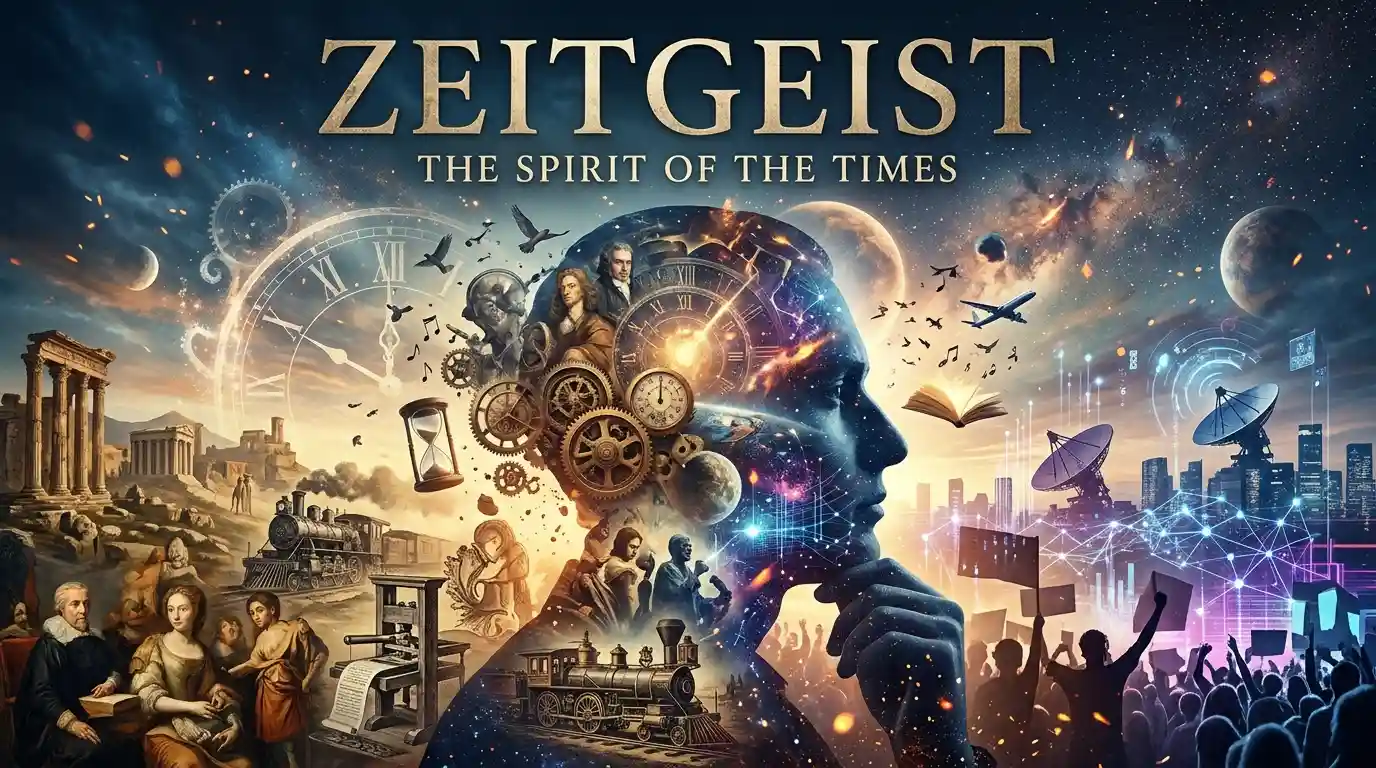
Zeitgeist means the spirit, mood, and cultural ideas that define a particular period in history.
Have you ever felt like the whole world is thinking the same way at the same time? Maybe you remember a time when everyone seemed to love the same music or worry about the same things.
That is the zeitgeist. The zeitgeist meaning is the spirit of a certain time in history. It is the general mood, ideas, and beliefs that people share during a specific period. Understanding this concept helps us see why people act and think the way they do.
It explains why things like fashion, politics, and music change over time. This guide will break down the zeitgeist meaning into simple parts. You will learn what it is, where the word comes from, and how it affects your daily life. By the end, you will see the world in a whole new way.
Quick Answer What Does Zeitgeist Mean?
The simplest zeitgeist meaning is “the spirit of the time.” It is the general way people think and feel during a particular period in history. The term comes from German words meaning “time” and “spirit” . Think of it as the invisible mood that hangs over a whole era.
The 1920s had a zeitgeist of fun and freedom. The 1960s had a zeitgeist of change and rebellion. The 2020s have a zeitgeist shaped by technology and global connection. When someone says a movie “captures the zeitgeist,” they mean it perfectly shows the ideas and feelings of that time.
Defining the Zeitgeist Meaning
The official zeitgeist meaning refers to the general beliefs, ideas, and spirit of a time and place . It is the cultural climate of an era. This includes the morals, thoughts, and tastes that most people seem to share .
For example, the Victorian period in England was marked by a strong belief in progress and industry . In the 1980s in America, the zeitgeist was all about money and power . These are not just small trends. They are big, sweeping ideas that define how people live their lives. The zeitgeist meaning also covers what people are reading, watching, and talking about. It is the “general trend of thought or feeling” that is common at a certain moment .
The concept is used by historians, writers, and sociologists to explain complex periods . It helps to understand why people make the choices they do. The zeitgeist is often described as something that is “in the air” . It shapes people’s actions, often without them even realizing it.
Where Does the Word “Zeitgeist” Come From?
The word “zeitgeist” is German. It is made of two parts: “Zeit” meaning “time,” and “Geist” meaning “spirit” or “ghost” . So, literally, it means “time-spirit.” It was first used in the 1700s by a German writer named Johann Gottfried Herder . The word became popular in English around the 1830s, thanks to the writer Thomas Carlyle .
The idea behind the word is older than the word itself. People have long believed that each era has its own special mood. In Latin, they used a phrase that meant “spirit of the century” . The German word “zeitgeist” simply gave that idea a new name that stuck.
A famous thinker named Georg Hegel also helped make the idea more popular . He believed that the zeitgeist was like a force driving history forward. It was not just about the mood of the people. It was about the progression of human ideas. Today, we use the word in a more casual way, but it still points to that sense of a shared, powerful spirit of the times.
How to Use “Zeitgeist” Correctly
Using the word “zeitgeist” is easy once you understand the zeitgeist meaning. You can use it to describe the mood of the past or the present. You can say, “The songs of the 1960s really captured the zeitgeist of that era” . This means the music perfectly expressed the feelings and beliefs of people living in the 1960s.
You can also use it to talk about today. For example, “The rise of social media is a key part of the modern zeitgeist.” This shows that social media is a huge part of how people live and think right now.
Here is a simple trick. If you can replace “zeitgeist” with “spirit of the times” and the sentence still makes sense, you are using it right.
The word is usually singular. There is one main spirit for a given period. You might see it spelled with a capital “Z” (Zeitgeist) or a lowercase “z” (zeitgeist). Both are okay in English . If you are writing about a specific era, using this word adds depth to your writing.
Real-Life Examples of the Zeitgeist
Looking at examples is the best way to understand the zeitgeist meaning. Let’s look at a few specific times in history.
- The Roaring 1920s: This decade had a zeitgeist of partying and freedom . People were tired of the war and wanted to have fun. Jazz music became huge. Women cut their hair short and wore flapper dresses. It was an era of “out with the old, in with the new” .
- The 1960s: This time was all about change and rebellion. The zeitgeist was about fighting for civil rights and peace. People questioned the government and wanted more freedom. Music and art were very experimental. The culture was all about individualism and making a statement .
- The 1980s: The zeitgeist shifted to money and power. This was the era of big business and Wall Street . People were focused on success and consumerism. Blockbuster movies, MTV, and big hair were all part of this spirit.
| Decade | The Zeitgeist | Key Elements |
| 1920s | Freedom and Fun | Jazz, flappers, speakeasies |
| 1960s | Rebellion and Change | Civil rights, peace, psychedelic art |
| 1980s | Money and Power | Wall Street, big hair, consumerism |
Modern Usage and Trends
The zeitgeist meaning today is very different from fifty years ago. Right now, we are living through a fast-moving time. One major part of the modern zeitgeist is technology. Social media, smartphones, and the internet shape almost everything we do . The way we talk, work, and even date is all part of the current zeitgeist.
Another big part is the focus on global issues. People are more aware of climate change, politics, and social justice than ever before. These are big topics that define how people think and act .
However, some people think the zeitgeist has become too fast and too small . In the past, a zeitgeist might last for decades. Now, it feels like it changes every five minutes. With the internet, a new fad or idea can become the “spirit of the times” for a week and then disappear. Some experts worry that we are losing the meaning of the word by using it for every small trend. But the core idea of a shared mood still feels very real.
Common Mistakes and Misconceptions
There are a few common mistakes people make with the zeitgeist meaning.
- Mistake 1: Using it for tiny trends. Some people use “zeitgeist” to talk about a new hairstyle or a funny video online. This is not correct. The true zeitgeist is a big, sweeping spirit that affects many people over a longer time. It is not a five-minute fad .
- Mistake 2: Thinking it is the same as “popular.” Just because something is popular does not mean it is part of the zeitgeist. A zeitgeist book might be popular, but it also says something deep about the time we live in. Some zeitgeist books become classics, while others are just popular for a few years .
- Mistake 3: Believing it is always obvious. The zeitgeist is often hard to see when you are living through it. It is like trying to see the shape of a forest when you are standing inside it. Often, historians are better at finding the zeitgeist of the past than we are at seeing our own .
Great Man Theory vs. Zeitgeist Theory
There is an old debate about how history is made. One idea is called the “Great Man Theory.” This theory says that history is shaped by powerful, special individuals . Heroes, geniuses, and strong leaders cause big changes. They act alone and change the world with their own power.
The other idea is the “zeitgeist theory.” This theory says that history is shaped by the times, not by individuals. Leaders and heroes are just products of their era. They come to power because the spirit of the time was ready for them .
For example, think of a famous leader. Was that leader special because they were a great person? Or were they just in the right place at the right time? The zeitgeist theory suggests that a different person would have stepped up if they had not existed. The change was going to happen anyway because the “spirit of the times” demanded it.
It is an interesting question. Most people now think it is a mix of both. Great people can shape the zeitgeist, and the zeitgeist can shape great people.
The Zeitgeist in Books, Movies, and Art
Art is one of the best ways to see the zeitgeist. Books, movies, and art are like mirrors. They show us what people are feeling and thinking. When people talk about a “zeitgeist book,” they are talking about a book that perfectly reflects the mood of its era .
George Orwell’s “1984” is a classic example. It captured the fear of totalitarianism during the Cold War. It is still talked about today because it captured a big idea of that time. Other books, like “The Naked Ape,” were huge bestsellers. They defined the zeitgeist of their era, even if they did not become classics .
Movies and music do the same thing. A hit song from the 1980s is often more than just a song. It is a time capsule of that era’s feelings and sounds. So, when you watch a classic movie or listen to an old song, you are getting a direct taste of the zeitgeist. They help us understand what life was like back then.
Breaking Down the Word
Let’s look closer at the parts of “zeitgeist” :
- “Zeit” means “time”. It refers to a specific period in history.
- “Geist” means “spirit”. This is the energy, the mood, or the core ideas of that time.
So, when you put them together, you get “time-spirit.” This literal breakdown perfectly matches the zeitgeist meaning. It is the spirit that belongs to a specific time. Another related word is “Volksgeist.” This means “national spirit” or the spirit of a specific group of people . While zeitgeist is about time, volksgeist is about a particular nation.
| Term | Translation | Meaning |
| Zeit | Time | A specific period or era |
| Geist | Spirit | Mood, ideas, or beliefs |
| Zeitgeist | Time-Spirit | The spirit of a specific time |
| Volksgeist | National Spirit | The spirit of a specific people or nation |
How to Spot the Zeitgeist in Your Own Life
It can be hard to see the zeitgeist when you are right in the middle of it. Here are a few tips on how to spot it.
- Look at Social Media: What are people talking about online? What challenges are popular? What causes are people sharing? The things that trend often give clues to the current spirit.
- Think About What You Buy: Why do people buy certain things? The things that are popular often show what people value. Are they buying fast fashion? Or are they buying eco-friendly products? That tells you a lot.
- Watch What People are Watching: The most popular TV shows and movies can be a sign of the zeitgeist. Why are certain stories so popular right now? It is because those stories relate to what people are feeling in their own lives.
- Listen to the News: What is the big story of the year? What are the major arguments or problems people are facing? This is the easiest way to see the mood of the times.
The zeitgeist is not always positive. Sometimes, it can be about fear or anxiety. Spotting it helps you understand the world around you better.
FAQs
1. What is a simple definition of zeitgeist?
The simplest zeitgeist meaning is the spirit of a specific time in history. It is the general beliefs, ideas, and feelings that a lot of people share during a certain period. For example, the 1960s had a zeitgeist of change and peace.
2. What does “zeitgeist” mean literally?
The word “zeitgeist” comes from German. It literally means “time-spirit.” It is made of two words: “Zeit” (time) and “Geist” (spirit or ghost) .
3. What is the difference between zeitgeist and trend?
A trend is a small, short-lived fashion or style. The zeitgeist is the big, over-arching spirit of an era. A trend is part of the zeitgeist, but the zeitgeist is much bigger and more important. It is the whole forest, not just one tree .
4. What is an example of a zeitgeist?
A good example is the 1920s. The zeitgeist of that time was about having fun, freedom, and partying. This was shown in the music (jazz), fashion (flappers), and social life of the era .
5. How do you use the word “zeitgeist” in a sentence?
You can say, “His paintings really captured the zeitgeist of the 1980s.” This means the paintings perfectly show what people were feeling and believing during that decade .
6. Is “zeitgeist” a good thing or a bad thing?
The zeitgeist is not good or bad. It is just a neutral fact. A certain time period could have a dark or fearful zeitgeist, or it could have a positive one. The term just describes the mood of the times .
Conclusion
The zeitgeist meaning is a powerful idea. It helps us understand why people act, think, and feel the way they do. It is the invisible spirit of the times.
The zeitgeist shapes our art, our politics, and our personal lives. It is the reason a song from the 1960s feels so different from a song from the 2020s. When we say something captures the zeitgeist, we are saying it perfectly reflects the mood of that time.
Understanding this concept is a great way to see the big picture of history. It also helps you see your own life in a new light. The zeitgeist is always changing. Today’s mood will be history tomorrow.
By paying attention, you can become more aware of the spirit of your own time. You can ask yourself: “What is the spirit of right now?” The answer can tell you a lot about yourself and the world you live in.

Hassan is a content writer at LinkQuorax, sharing simple and clear meanings of words, slang, phrases, and everyday expressions to help readers understand language easily.