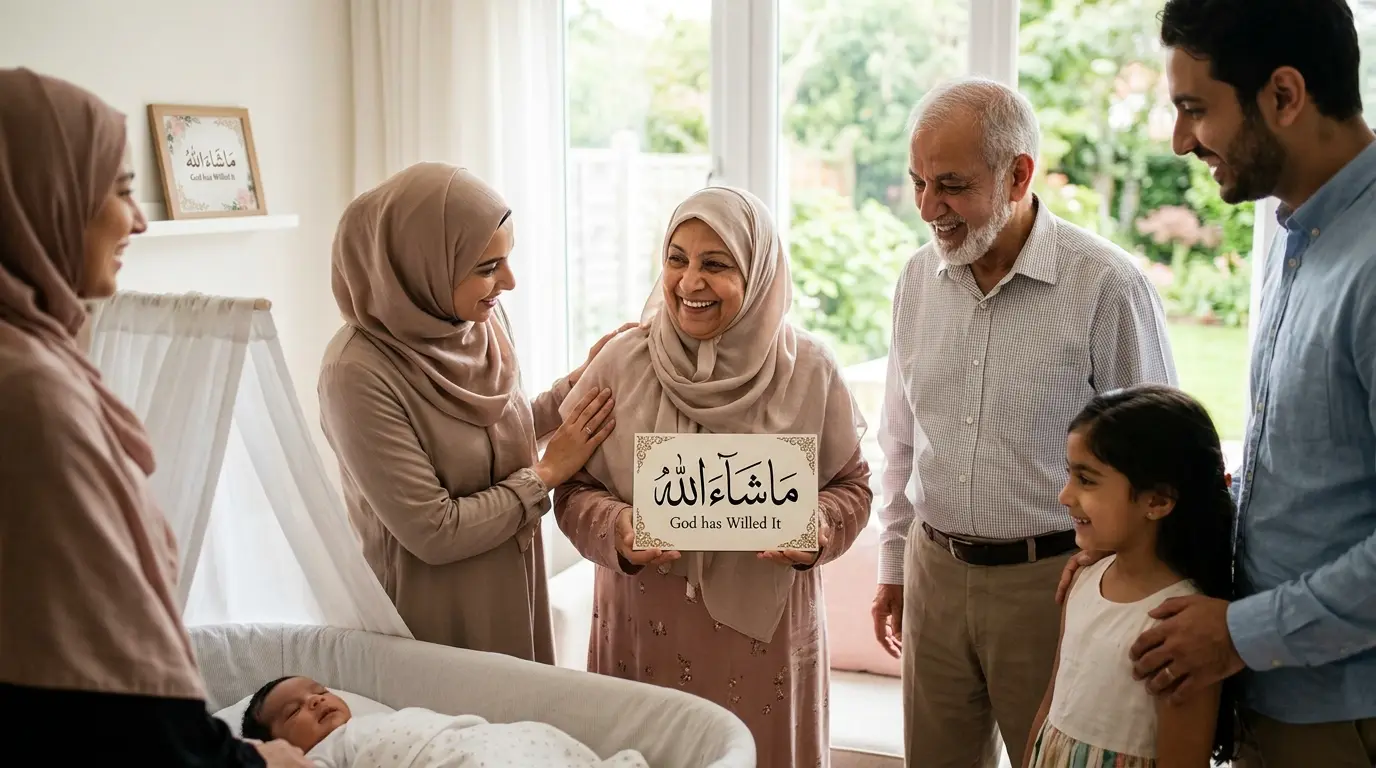
MashaAllah is an Arabic phrase that means “God has willed it” or “What God has willed has happened.” People say it to show thanks, joy, or amazement about something good.
You will hear MashaAllah when someone sees a cute baby, hears good news, or notices something beautiful. It is one of the most common phrases in the Muslim world, but many non-Muslims hear it too and wonder what it means.
This article will explain the true meaning of MashaAllah, how to use it correctly, where it comes from, and why people say it so often. By the end, you will know exactly when and how to use this special phrase.
Quick Answer
MashaAllah (also spelled Masha’Allah or Ma sha Allah) is an Arabic expression that means “God has willed it” or “This is what God wanted.” People say it when they see or hear something good, beautiful, or impressive.
It shows gratitude to God and reminds the speaker that all good things come from Him. It is often used as a way to protect something good from bad luck or jealousy, similar to how some people knock on wood.
Meaning and Definition
The phrase MashaAllah comes from three Arabic words joined together. “Ma” means “what,” “sha” means “willed” or “wanted,” and “Allah” means “God.” Put together, the phrase means “What God has willed” or “God has willed it.”
In simple terms, when someone says MashaAllah, they are saying that something good happened because God wanted it to happen. It is a way of giving credit to God instead of taking all the credit for good luck, beauty, success, or talent.
For example, if a mother sees her child doing well in school, she might say MashaAllah. She is not just praising her child. She is also thanking God for that blessing. This habit keeps people humble and grateful instead of proud or boastful.
Many people also believe that saying MashaAllah helps guard against the “evil eye.” The evil eye is an old belief found in many cultures, including Arab, South Asian, and Mediterranean cultures. It is the idea that jealousy or envy from others can bring bad luck to something good, like a new baby, a new house, or good health. Saying MashaAllah after noticing something good is thought to protect it from harm caused by jealousy.
Origin and History
MashaAllah has deep roots in the Arabic language and in Islamic tradition. The phrase appears in the Quran, the holy book of Islam. In Surah Al-Kahf, chapter 18, verse 39, the Quran teaches that when a person enters their garden or sees something they are proud of, they should say “Ma sha Allah, la quwwata illa billah,” which means “What God has willed; there is no power except with God.”
This verse is part of a story about two men. One man is proud and boastful about his beautiful garden. He forgets to thank God for it. The other man reminds him that he should have said MashaAllah instead of bragging. Soon after, the boastful man’s garden is destroyed. This story is often used to teach the lesson that pride without gratitude can lead to loss, while humility and gratitude protect blessings.
Because of this Quranic teaching, Muslims have used MashaAllah for over 1,400 years. Over time, it also became common outside religious settings. Today, people from many backgrounds, including non-Arabic speakers, use the phrase, especially in South Asia, the Middle East, North Africa, and Muslim communities around the world.
Grammar and Correct Usage
MashaAllah is used as an exclamation, much like saying “Wow” or “Amazing” in English, but with a deeper spiritual meaning. It does not change form based on gender, number, or tense. You say the same phrase whether you are talking to a man, a woman, one person, or many people.
Here is how MashaAllah is typically used in a sentence:
| Situation | Example Sentence |
| Seeing a healthy baby | “MashaAllah, your baby is so healthy and happy!” |
| Hearing about a promotion | “You got the job? MashaAllah, that’s wonderful news!” |
| Complimenting a new home | “MashaAllah, your new house looks beautiful.” |
| Noticing good grades | “MashaAllah, you did so well on your exam.” |
| Admiring nature | “MashaAllah, look at that beautiful sunset.” |
MashaAllah can stand alone as a short reaction, or it can be added at the beginning or end of a sentence. Both ways are correct. Some people write it as one word, “MashaAllah,” while others write it as two or three words, “Masha Allah” or “Ma sha Allah.” All spellings are accepted, though “MashaAllah” is the most common form seen online and in casual writing.
Common Mistakes
Many people who are new to this phrase make small mistakes when learning it. Here are the most common ones.
The first mistake is confusing MashaAllah with InshaAllah. These two phrases sound similar but mean different things. MashaAllah is used for something that has already happened or is happening now, like a compliment. InshaAllah means “God willing” and is used for something that might happen in the future, such as plans or hopes.
The second mistake is confusing MashaAllah with Alhamdulillah. Alhamdulillah means “praise be to God” and is usually said after something good happens to the speaker personally, such as recovering from an illness. MashaAllah is more often used when reacting to something good about someone or something else, like admiring another person’s success or beauty.
The third mistake is using MashaAllah in a negative or sarcastic way. Since it is a phrase of respect and gratitude, using it to mock someone or as a joke can be seen as disrespectful by many Muslims.
The table below shows the difference between these three common Arabic phrases so you can use each one correctly.
| Phrase | Meaning | When to Use It |
| MashaAllah | “God has willed it” | Reacting to something good, beautiful, or impressive |
| InshaAllah | “God willing” | Talking about future plans or hopes |
| Alhamdulillah | “Praise be to God” | Thanking God after something good happens to you |
Real-Life Examples
MashaAllah shows up in everyday conversations far beyond religious settings. A grandmother might say it while looking at old family photos. A teacher might say it after a student gives a great presentation. A friend might say it while scrolling through vacation photos on social media.
It is also common on social media captions. People often write “MashaAllah” under photos of weddings, graduations, new babies, or achievements. This shows that the phrase has grown beyond religious use and become part of everyday language for many communities, even among people who are not deeply religious.
In South Asian culture, especially in Pakistan, India, and Bangladesh, MashaAllah is used constantly in daily speech, sometimes even by non-Muslims who have grown up around Muslim neighbors, friends, or coworkers. It has become part of the shared cultural vocabulary in these regions.
Current Usage and Trends
Today, MashaAllah is used both online and offline by people of many different backgrounds. It appears often in Instagram captions, YouTube comments, and TikTok videos, especially under posts showing something impressive, wholesome, or beautiful. Because social media connects people across cultures, many non-Muslim users have also started using the phrase, sometimes without knowing its full religious meaning.
Some Muslims have expressed concern about the phrase being used carelessly by people who do not understand its spiritual weight. Still, most agree that using it with good intentions, even by those learning about the culture, is generally seen as respectful rather than offensive.
You may also notice the phrase trending during major life events shared online, such as weddings, newborn announcements, graduations, and career milestones. It has become a warm, positive way to celebrate good news across the internet.
Tips for Using MashaAllah Correctly
If you want to use this phrase respectfully and correctly, keep a few simple tips in mind. First, use it when you genuinely feel happy, thankful, or amazed about something good. Second, avoid using it as a joke or in a sarcastic tone, since that can feel disrespectful to people who use it with religious meaning. Third, remember that it is meant to give credit to God, not just to compliment a person, so it carries a slightly different feeling than a simple “nice job.”
It also helps to listen to how native speakers use it in daily life. Paying attention to context will help you understand the natural rhythm and timing of the phrase better than reading definitions alone.
FAQs
What does MashaAllah mean in English?
MashaAllah means “God has willed it” or “What God has willed has happened.” It is said to show thanks and appreciation for something good, while giving credit to God.
Is MashaAllah only used by Muslims?
No. While it comes from Islamic tradition and the Quran, many non-Muslims in Arab and South Asian communities also use it as part of everyday language, especially to compliment something without causing bad luck.
What is the difference between MashaAllah and InshaAllah?
MashaAllah is used for something good that has already happened, like a compliment. InshaAllah means “God willing” and is used when talking about future hopes or plans.
Why do people say MashaAllah instead of just saying “wow”?
Saying MashaAllah adds a spiritual meaning to a compliment. It reminds the speaker that good things come from God, and it is believed to protect the good thing from jealousy or the evil eye.
How do you spell MashaAllah correctly?
Common spellings include MashaAllah, Masha’Allah, and Ma sha Allah. All are accepted, though MashaAllah written as one word is the most common spelling seen today.
Can MashaAllah be used for objects, not just people?
Yes. MashaAllah can be used to admire anything good, including a beautiful view, a new car, a delicious meal, or a well-built house, not just people or achievements.
Conclusion
MashaAllah is a simple but powerful phrase that means “God has willed it.” People use it to show gratitude, express amazement, and give credit to God for good things in life, whether that is a healthy baby, good news, or something beautiful.
Rooted in the Quran and Islamic tradition, it has grown into a phrase used by many cultures and communities around the world, both online and in daily conversation.
The next time you hear or read MashaAllah, you will know it is more than just a compliment. It is a small reminder to stay grateful and humble about the good things in life.

Hi, I’m Benjamin Dreyer. I enjoy exploring words, phrases, slang, abbreviations, acronyms, and digital communication. At Linkquorax.com, I share simple and accurate explanations to help readers understand unfamiliar terms and popular internet expressions. My goal is to make every meaning clear, useful, and easy to understand. Whether you are curious about a new word or an online phrase, Linkquorax.com provides straightforward information to help you learn quickly and communicate with confidence in everyday conversations.