Inshallah means “if God wills” or “if God wills it.” It is an Arabic expression commonly used by Muslims when talking about something they hope, plan, or expect to happen in the future.
The phrase expresses hope while recognizing that the future is ultimately in God’s hands. You may see it in texts, social media posts, conversations, prayers, and everyday speech.
If you searched for “Inshallah meaning,” you may also be wondering whether it is religious, how to pronounce it, when to use it, or what someone means when they reply “Inshallah” to you. The answer can depend on the context.
This guide explains the meaning, Arabic origin, pronunciation, examples, common misunderstandings, and everyday use in simple terms.
Quick Answer:
Inshallah is an Arabic phrase that means “if God wills” or “God willing.”
It is written in Arabic as إن شاء الله and is made from three words:
| Arabic | Meaning |
| إن | if |
| شاء | willed |
| الله | God |
Together, إن شاء الله (in shāʾ Allāh) means “if God wills.”
Muslims commonly say it when referring to a future event. For example, someone might say, “I will see you tomorrow, Inshallah,” meaning, “I plan to see you tomorrow, if God wills.”
The phrase does not necessarily mean that a person is unsure about their plan. It can express confidence, hope, humility, and recognition that people cannot fully control what happens in the future.
Inshallah Meaning in Simple English
The easiest English translation of Inshallah is “God willing.”
Imagine that a friend asks:
“Are you coming to the party tomorrow?”
You might answer:
“Yes, Inshallah.”
In this context, you are saying that you intend or hope to come, while acknowledging that circumstances may change.
The phrase can carry several closely related ideas:
- If God allows it
- If God wills it
- God willing
- Hopefully, with God’s permission
- If everything goes according to God’s will
The exact feeling depends on the speaker and situation.
For many Muslims, using Inshallah is also a reminder that human plans are not completely independent of God. A person can make plans and take action while still recognizing God’s authority over the future.
What Is the Religious Meaning of Inshallah?
Inshallah has an important place in Islamic language and belief. It reflects the idea that people should not speak about future events as though they have complete control over them.
The concept is mentioned in the Quran in connection with making future plans. In Quran 18:23–24, believers are instructed not to say they will do something in the future without adding that it will happen if Allah wills.
This is why Inshallah is more than a casual Arabic phrase for many Muslims. It can express faith, humility, and dependence on God’s will.
At the same time, the phrase is also used in everyday conversation. A Muslim might say it when talking about work, travel, school, family plans, appointments, or future goals.
The religious meaning remains important, but the everyday use can feel very natural and conversational.
How Do You Pronounce Inshallah?
Inshallah is commonly pronounced approximately:
in-SHAH-lah
The Arabic pronunciation is more accurately represented as in shāʾ Allāh.
The middle sound comes from the Arabic letter ش (shīn), which makes an “sh” sound. The word Allah is pronounced with the Arabic sounds used in the name of God.
English spellings vary because Arabic sounds do not always have one exact English spelling.
You may see:
| Spelling | Notes |
| Inshallah | Very common English spelling |
| Insha Allah | Separates the words |
| In Sha Allah | Another common form |
| In shāʾ Allāh | More precise academic transliteration |
| إن شاء الله | Arabic spelling |
These forms generally refer to the same Arabic expression.
How Is Inshallah Written in Arabic?
The standard Arabic spelling is:
إن شاء الله
Arabic is written from right to left.
The phrase contains three separate words:
إن + شاء + الله
The first word means “if.” The second comes from a verb related to willing or wishing. The final word is Allah, meaning God.
A common English-language mistake is treating the entire phrase as one Arabic word. In standard Arabic writing, إن شاء الله is written as separate words.
For everyday English writing, however, Inshallah is widely used as one transliterated word.
What Does Inshallah Mean in a Text?
In texting, Inshallah usually has the same basic meaning as “God willing,” but the exact message depends on the conversation.
For example:
Person A: “Are you going to visit your family this weekend?”
Person B: “Inshallah.”
This could mean:
“I hope so, and if God wills, I will.”
Another example:
Person A: “I hope you get the job.”
Person B: “Inshallah!”
Here, the person may be expressing hope that the job offer happens.
Someone might also write:
“I’ll call you tonight, Inshallah.”
This expresses an intention to call while acknowledging that the future is not completely under their control.
In casual texting, people may also write inshaAllah, inshallah, or simply IA. However, abbreviations can lose some of the meaning or respect associated with the full phrase, so usage varies from person to person.
Examples of Inshallah in Everyday Sentences
Understanding examples is one of the easiest ways to learn how Inshallah works.
Here are some natural examples:
| Sentence | Meaning |
| “I’ll see you tomorrow, Inshallah.” | I hope and plan to see you tomorrow, God willing. |
| “Inshallah, everything will be okay.” | I hope everything will be okay, with God’s will. |
| “We will visit next summer, Inshallah.” | We plan or hope to visit next summer, God willing. |
| “I’ll finish the project tonight, Inshallah.” | I intend to finish it tonight, God willing. |
| “You’ll succeed, Inshallah.” | I hope you succeed, God willing. |
| “Inshallah, we can meet soon.” | Hopefully, we can meet soon, God willing. |
| “I hope to travel to Egypt one day, Inshallah.” | I hope to travel there someday, God willing. |
Notice that Inshallah is normally connected with something future-oriented. It is especially common when discussing plans, hopes, expectations, or wishes.
When Should You Use Inshallah?
If you are not Muslim but have heard the phrase and want to understand how it is used, context and respect matter.
In general, Inshallah is appropriate when discussing a future event in a context where the expression naturally fits. It is widely used by Muslims from many different cultures and languages.
For example, a person might say:
“Inshallah, I’ll be there on Friday.”
Or:
“We hope to finish the work next week, Inshallah.”
The phrase can appear in formal and informal settings, although everyday speech is where you are most likely to hear it.
It is not necessary to add Inshallah to every sentence about the future. It is a meaningful expression, so using it naturally is better than adding it simply because you have heard others say it.
Is Inshallah Only Used by Muslims?
Inshallah is strongly associated with Islam and is especially common among Muslims, but Arabic-speaking Christians and other Arabic speakers may also use the phrase.
The reason is simple: Inshallah is an Arabic expression, not an English word created exclusively for Muslim communities.
Arabic-speaking Christians may use inshallah when speaking about future events because the phrase means “if God wills.” Similar expressions based on God’s will can also appear in other religious communities and languages.
That said, the phrase has a particularly strong cultural and religious connection to Muslims around the world.
Its use can vary based on a person’s culture, language, family background, and religious practice.
Is Inshallah a Promise?
Not necessarily.
This is one of the most important points to understand about the expression.
If someone says:
“I will come tomorrow, Inshallah.”
They are usually expressing an intention or hope while acknowledging that the final outcome depends on God’s will.
It does not automatically mean:
“I probably won’t come.”
Sometimes people unfamiliar with the phrase interpret it that way, especially when they hear it in situations involving plans.
In some cultures and conversations, however, Inshallah can be used more loosely, and the speaker’s exact level of commitment depends on context.
For example, if someone says:
“Inshallah, I’ll send it tonight.”
They may genuinely intend to send it that night. Another person might use the phrase to express uncertainty about whether they can complete the task.
The surrounding conversation matters.
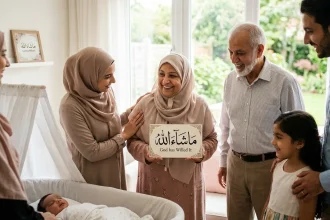
What Is the Difference Between Inshallah and Mashallah?
Inshallah and Mashallah are both common Arabic expressions associated with Muslim speech, but they are used differently.
| Expression | Basic meaning | Common use |
| Inshallah | If God wills | Future hopes and plans |
| Mashallah | What God has willed | Appreciation of something that has happened or exists |
For example:
Inshallah:
“I will visit you next month, Inshallah.”
This refers to the future.
Mashallah:
“Your daughter has grown so much, Mashallah.”
This expresses appreciation or admiration for something that exists or has happened.
They should not normally be treated as interchangeable.
Inshallah vs. God Willing
In English, “God willing” is the closest common translation of Inshallah.
The two expressions can be used in similar situations:
“I will see you tomorrow, God willing.”
“I will see you tomorrow, Inshallah.”
The main difference is linguistic and cultural. Inshallah is an Arabic expression with strong cultural and religious significance, while God willing is an English phrase used by people from different religious backgrounds.
The translation may capture the basic meaning, but it does not always capture every cultural feeling associated with the Arabic phrase.
Common Mistakes About Inshallah
Because the phrase is often translated into one or two English words, some of its meaning can be misunderstood.
One common mistake is assuming that Inshallah always means “maybe.” It does not have one fixed English equivalent that describes the speaker’s level of certainty.
Another mistake is thinking that saying Inshallah means a person is making no effort. In Islamic thought, making plans and taking action can exist alongside trust in God’s will.
It is also incorrect to assume that every Muslim uses the phrase in exactly the same way. Muslim communities are diverse, and language habits differ across countries and families.
Finally, avoid treating Inshallah as merely a trendy slang word. For many speakers, it has genuine religious meaning.
Inshallah in Different Cultures and Languages
You can hear Inshallah in many Muslim-majority countries and communities, including places where Arabic is not the main everyday language.
The expression has traveled with Islam and Arabic religious vocabulary into languages such as Urdu, Persian, Turkish, Malay, Indonesian, and others.
The pronunciation and spelling may change slightly from one language to another.
For example, an Urdu speaker may commonly write or pronounce it in a way influenced by Urdu phonetics, while an English speaker may use the spelling Inshallah.
Despite these differences, the central idea remains connected to God’s will.
This wide use is one reason you may encounter Inshallah in international conversations, social media, messages, movies, and online communities.
Is It Spelled Inshallah, InshaAllah, or In Sha Allah?
All of these spellings are commonly seen in English:
Inshallah
InshaAllah
In Sha Allah
In shāʾ Allāh
The first three are informal English transliterations. The final version is closer to a scholarly transliteration of Arabic.
If you are writing for a general English-speaking audience, Inshallah is simple and widely recognizable.
If you are writing Arabic, the standard form is:
إن شاء الله
The exact English spelling is less important than understanding what the expression means and using it respectfully.
Why Do People Say Inshallah?
People say Inshallah for several connected reasons.
For many Muslims, it expresses faith in God’s control over the future. It can also show humility because people make plans but cannot guarantee every outcome.
It may express hope:
“Inshallah, things will get better.”
It may express a future plan:
“Inshallah, I’ll visit you soon.”
It can also express encouragement:
“Inshallah, you will achieve your goal.”
In everyday conversation, the phrase can therefore carry both religious meaning and ordinary social meaning.
The best way to understand it is not as a single English word but as a short expression that connects a person’s future hope or intention with God’s will.
Frequently Asked Questions
What does Inshallah literally mean?
Inshallah literally means “if God wills.” It comes from the Arabic phrase إن شاء الله (in shāʾ Allāh).
Is Inshallah a religious word?
Yes. Inshallah has an important religious meaning in Islam because it recognizes that future events happen according to God’s will. It is also used as an everyday Arabic expression.
Can I say Inshallah if I am not Muslim?
The phrase is closely connected with Islam and Muslim culture, but it is also an Arabic expression used by Arabic speakers from different religious backgrounds. If you use it, understanding and respecting its meaning is important.
Does Inshallah mean maybe?
Not exactly. Inshallah means “if God wills.” Depending on context, it can express hope, intention, or uncertainty about a future event, but “maybe” is not its direct translation.
What is the difference between Inshallah and Mashallah?
Inshallah generally refers to something hoped for or planned in the future, while Mashallah is commonly used when expressing appreciation or admiration for something that exists or has happened.
How do you write Inshallah in Arabic?
The standard Arabic spelling is إن شاء الله. In English, common transliterations include Inshallah, Insha Allah, and In Sha Allah.
Conclusion
Understanding the Inshallah meaning is about more than translating three Arabic words. At its simplest, Inshallah means “if God wills” or “God willing.”
It is commonly used when people talk about future plans, hopes, and expectations while recognizing that the future ultimately rests with God.
For many Muslims, the expression carries faith, humility, and trust. In everyday conversation, it can also be a natural way to talk about plans without treating the future as completely guaranteed. Its exact feeling can change with the context and the speaker.
If you encounter Inshallah in a text or conversation, look at what comes before and after it. Usually, the speaker is expressing a future hope or intention while placing that future in God’s hands.

Hi, I’m Benjamin Dreyer. I enjoy exploring words, phrases, slang, abbreviations, acronyms, and digital communication. At Linkquorax.com, I share simple and accurate explanations to help readers understand unfamiliar terms and popular internet expressions. My goal is to make every meaning clear, useful, and easy to understand. Whether you are curious about a new word or an online phrase, Linkquorax.com provides straightforward information to help you learn quickly and communicate with confidence in everyday conversations.