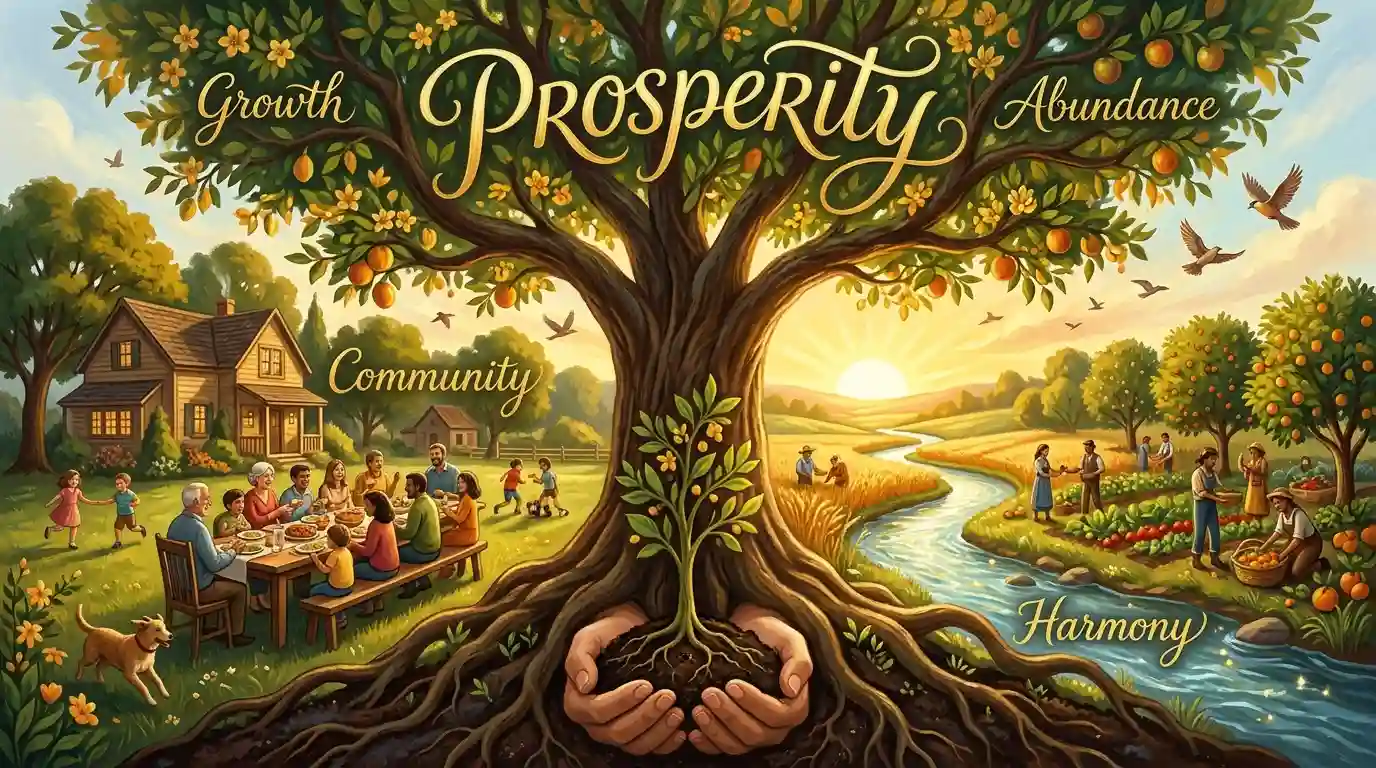
If you have ever wondered about the meaning, here is the short answer: prosperity means having enough good things in life to feel safe, happy, and successful. It is not just about money. It also includes health, good relationships, and peace of mind.
People search for this word because they want to know if prosperity is only about being rich, or if it means something bigger. In this article, you will learn the true meaning of prosperity, how it is used in sentences, where the word comes from, and how it applies to real life today.
By the end, you will understand prosperity in a simple, clear way.
Quick Answer
Prosperity means doing well in life. It usually points to success, wealth, and good fortune. But prosperity is bigger than just having money in the bank. It also means feeling healthy, having strong relationships, and living with a sense of stability.
When someone says a country or a person is “prospering,” they mean things are going well for them overall, not just financially.
Meaning or Definition
The word prosperity is a noun. It describes a state of being successful, thriving, or flourishing. Most dictionaries define prosperity as the condition of being successful, especially in money matters. But the word covers more ground than that.
Think of prosperity as a wide umbrella. Under that umbrella, you find things like:
- Financial stability (having enough money for needs and wants)
- Good health (feeling strong and well)
- Strong relationships (family, friends, community)
- A sense of purpose (feeling like your life has meaning)
- Peace of mind (not living in constant stress or fear)
When all these areas are working well together, a person is said to be “prospering.” A business can prosper too. So can a country, a city, or even a small town. Prosperity is about growth and good conditions, not just about a big bank account.
Here is a simple way to remember it: if things are getting better and staying good, that is prosperity.
Grammar or Correct Usage
Prosperity is an uncountable noun. This means you do not say “prosperities” or “a prosperity.” Instead, you use it alone or with words like “great,” “economic,” “national,” or “personal.”
Here are a few correct examples:
- “The country enjoyed years of economic prosperity.”
- “She wished her friend health, happiness, and prosperity.”
- “Prosperity does not happen overnight.”
The related adjective is prosperous, which describes a person, place, or thing that has prosperity. For example, “He runs a prosperous business” means his business is doing very well.
The related verb is prosper. You might say, “I hope your garden prospers this year,” meaning you hope it grows and does well.
Many people mix up prosperity with luck. But prosperity usually comes from effort, planning, and good conditions over time. Luck is more about random chance. Prosperity is often the result of steady work, smart choices, and sometimes a little help along the way.
| Word | Type | Example Sentence |
| Prosperity | Noun | “The town saw a wave of prosperity after the factory opened.” |
| Prosperous | Adjective | “They live in a prosperous neighborhood.” |
| Prosper | Verb | “Small businesses can prosper with the right support.” |
Origin or History
The word prosperity has old roots. It comes from the Latin word prosperitas, which relates to prosper, meaning “favorable” or “fortunate.” This Latin root passed into Old French as prosperite, and then into Middle English by around the 14th century.
Back then, prosperity often referred to good fortune or favorable outcomes in general life events, not just money. Over the centuries, especially during times of trade and economic growth, the word became more closely tied to wealth and financial success. Still, its older, broader meaning never fully disappeared. Even today, many people use prosperity to describe overall well-being, not just money.
Real-Life Examples
Understanding a word gets easier with real examples. Here are a few ways prosperity shows up in daily life and conversation:
In business: A company might report “record prosperity” after a strong year of sales. This means the business grew, made good profits, and is in a healthy financial position.
In personal life: A person might say, “After years of hard work, my family finally found prosperity.” This could mean they bought a home, paid off debts, or simply feel more secure.
In greetings and wishes: Many cultures wish each other “health and prosperity” during holidays, weddings, or the New Year. This shows that prosperity is tied to hope for a good future, not just wealth.
In government and economics: Leaders often talk about “shared prosperity,” meaning they want economic growth to benefit everyone, not just a small group of wealthy people.
In self-help and mindset talk: Some people use the phrase “prosperity mindset.” This means thinking in ways that support growth, gratitude, and positive action instead of fear or scarcity.
These examples show that prosperity can describe a country’s economy, a family’s situation, or even a personal attitude toward life.
Current Usage or Trends
Today, prosperity is a word used often in news, business reports, and even social media. People talk about “economic prosperity” when discussing jobs, wages, and growth. Financial writers and government reports frequently measure prosperity using numbers like income levels, employment rates, and cost of living.
At the same time, there is a growing conversation about what prosperity truly means beyond money. Many researchers and writers now discuss “well-being” alongside prosperity, arguing that a prosperous life also needs good health, free time, and strong relationships. This broader view has become more common in recent years, especially as people rethink what a “successful life” looks like after periods of economic uncertainty.
You will also see prosperity used in wellness and mindset content online, where it is connected to ideas like gratitude, goal-setting, and personal growth. This shows the word has grown beyond strict financial talk and now touches many parts of modern life.
| Context | How Prosperity Is Used |
| Economics | Measured through income, jobs, and growth |
| Personal Life | Linked to stability, security, and comfort |
| Wellness Culture | Connected to mindset, gratitude, and balance |
| Government Policy | Used to describe shared or national growth |
Tips or Best Practices
If you want to use the word prosperity correctly and thoughtfully, keep these simple tips in mind:
- Use prosperity when talking about overall success, not just a single win or lucky moment.
- Pair it with words like “economic,” “shared,” “personal,” or “lasting” to make your meaning clearer.
- Avoid using prosperity for very small or short-term events. It usually describes a state that lasts over time.
- Remember that prosperity is not only about money. If you want to focus purely on wealth, the word “riches” or “wealth” might fit better.
- When writing wishes or greetings, “prosperity” pairs naturally with words like health, happiness, peace, and success.
Common Mistakes
Many people confuse prosperity with related but different words. Here are common mistakes to avoid.
Some think prosperity only means being rich. In reality, prosperity includes wealth but also covers health, relationships, and stability. A person can be prosperous in life without being extremely wealthy.
Others confuse prosperity with profit. Profit is a specific financial term used for businesses, describing money earned after costs. Prosperity is broader and can apply to people, families, or nations, not just business finances.
Some writers also misuse the word by making it plural, saying “prosperities.” Since prosperity is uncountable, this is incorrect. Stick with the singular form in all cases.
FAQs:
What does prosperity mean in simple words?
Prosperity means doing well in life. It includes having enough money, good health, and stability, not just being wealthy.
Is prosperity only about money?
No. While money is part of prosperity, it also includes health, relationships, peace of mind, and overall well-being.
What is the difference between prosperity and wealth?
Wealth usually means having a lot of money or valuable things. Prosperity is broader and includes overall success and well-being, not just financial worth.
What is a prosperity mindset?
A prosperity mindset is a way of thinking that focuses on growth, gratitude, and opportunity instead of fear or lack. It often involves believing that good outcomes are possible with effort and positive thinking.
Can a country have prosperity?
Yes. When a country has strong economic growth, low unemployment, and rising living standards, it is often described as experiencing national or economic prosperity.
How do you use prosperity in a sentence?
You can say, “The new trade deal is expected to bring prosperity to the region,” or “They wished the newlyweds a lifetime of health and prosperity.”
Conclusion:
Prosperity means much more than having money. It is about living well in many parts of life, including health, relationships, and peace of mind, along with financial stability.
If you are talking about a business, a family, or an entire country, prosperity points to steady growth and lasting well-being. Now that you understand the full meaning of prosperity, you can use the word correctly in conversations, writing, and even in your own goals.
The real takeaway is simple: true prosperity comes from balance, not just wealth. Keep building good habits, strong relationships, and financial stability, and prosperity will naturally follow.

Hi, I’m Benjamin Dreyer. I enjoy exploring words, phrases, slang, abbreviations, acronyms, and digital communication. At Linkquorax.com, I share simple and accurate explanations to help readers understand unfamiliar terms and popular internet expressions. My goal is to make every meaning clear, useful, and easy to understand. Whether you are curious about a new word or an online phrase, Linkquorax.com provides straightforward information to help you learn quickly and communicate with confidence in everyday conversations.